The Wardrobe That Pays Rent: Inside America's New Resale-Value Dressing
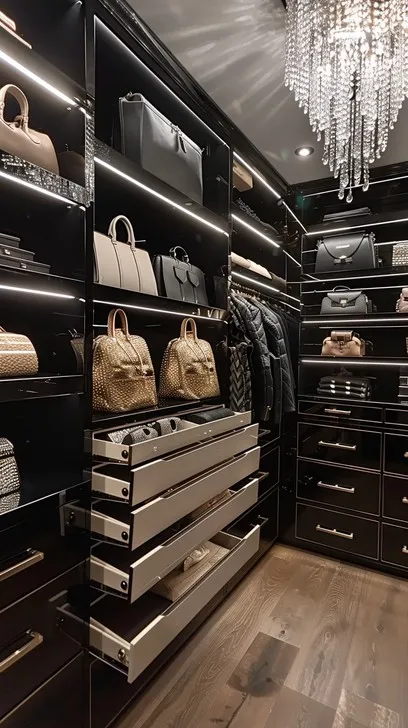
Photo: elegant woman closet luxury designer handbags coats wardrobe, via images.stockcake.com
There was a time when the receipt from a luxury boutique was the end of a transaction. Increasingly, for style-conscious American women, it is merely the beginning of one. Across the country — from Chicago to Dallas to the brownstone stoops of Brooklyn — shoppers are weighing a question their mothers never asked: not just what will this cost me, but what will it return?
The practice has a name circulating in styling circles and resale offices alike: resale-value dressing. It is the deliberate purchase of European pieces — a Chanel jacket, a Hermès scarf, a pair of Margiela tabis — with one eye on the present and one on the eventual consignment slip. And it is quietly rewriting the arithmetic of the American luxury purchase.
The Asset You Can Wear
"We saw the shift accelerate after 2020," says one senior merchandiser at a major resale platform, who asked to speak generally about platform data. "Buyers started treating handbags like index funds. Then it moved into tailoring. A woman will call and ask, point blank, 'Which of these coats holds value?' She's not being frivolous. She's being financial."
The numbers back the instinct. Certain French houses have become famously liquid: a classic double-breasted Chanel tweed in good condition routinely resells at or above retail, while Hermès leather goods have historically appreciated faster than many traditional investments. Italian labels with rigorous construction — Bottega Veneta's intrecciato, Loro Piana's cashmere — command strong second-market prices because the craft survives the first owner.
What distinguishes today's shopper from the mere consignment flipper is intent. Resale-value dressers buy to wear, thoroughly and for years. The resale value functions less like a day-trade and more like a deposit returned at the end of a lease.
The Buy-It-Once Mentality
Personal stylists describe the psychology as a corrective to fast fashion's disposability. "Clients come to me exhausted by their own closets," says a New York-based stylist whose clientele spans finance and the arts. "They've bought forty inexpensive pieces and own nothing. The European buy-once framework gives them permission to spend meaningfully — because the piece is justified three ways: it's worn now, it lasts, and it retains worth."
That justification is reshaping how Americans approach the luxury counter altogether. The question at checkout is no longer simply do I love it but a three-part audit: Does it fit my life? Is it a house signature or a seasonal novelty? And will the next woman want it?
The answers tend to favor the classics. Quilted leather goods with hardware that doesn't date. Tailoring in wool rather than trend-driven blends. Neutral outerwear — the trench, the biker, the camel coat — that photographs as well on a consignment listing as it does on a Paris sidewalk.
Which Labels Hold Their Line
Resale experts broadly sort European houses into tiers of liquidity. At the top sit the names with protected distribution and disciplined pricing: Hermès, Chanel, and Louis Vuitton in leather goods; Hermès silk scarves as an accessible entry point. A tier below, houses like Celine, Saint Laurent, and Loewe hold value well when the piece is an icon — the Trapeze, the Sac de Jour, the Puzzle bag — and soften when it is not.
Italian craftsmanship plays its own role. Ferragamo's structured bags, Prada's nylon revival pieces, and Max Mara's camel coats all trade on construction that endures. "The market rewards anything that looks the same in year ten as it did in the boutique," the merchandiser notes.
What collapses value is faster than what builds it: seasonal logos, novelty hardware, pale leathers, and anything too identified with a single moment. A general rule circulating among stylists: if you can date the piece to a specific collection, think twice; if it could have been sold a decade ago, buy it.
Protecting the Investment, Stitch by Stitch
The second half of resale-value dressing is stewardship. Resale platforms grade condition with unforgiving precision, and the difference between "excellent" and "good" can be thirty percent of the price.
The protocols are unglamorous but effective. Store structured bags stuffed, in dust bags, away from sunlight; rotate them so handles don't develop permanent creases. Dry-clean wool tailoring sparingly — twice a season at most — and always with a specialist, never a strip-mall cleaner. Deodorize cashmere with cedar rather than chemicals. Keep every box, dust bag, and receipt: "full set" listings routinely command fifteen to twenty percent premiums.
Heels deserve particular attention. Resole a Louboutin before the red lacquer wears to the nub; replace tap marks on leather soles early. A cobbler's sixty-dollar intervention can protect a four-figure resale price.
The New Justification
Skeptics will note, fairly, that dressing for a future appraisal is its own kind of absurdity — that clothes were meant to be lived in, not appraised. The women practicing resale-value dressing would likely agree. The point, they insist, is not to wear a garment timidly. It is that a piece bought well, cared for properly, and worn joyfully for years can be passed on — to a new owner, a daughter, or the resale market — rather than discarded.
In that sense, the trend is less about money than about a changed relationship with ownership. European fashion has always argued that a wardrobe should be built, not accumulated. American women, it turns out, have found a compelling new reason to listen: the best pieces don't just hold their shape. They hold their worth.