Five Fixes, One Wardrobe: The Alterations Receipt Every American Shopper Should Expect
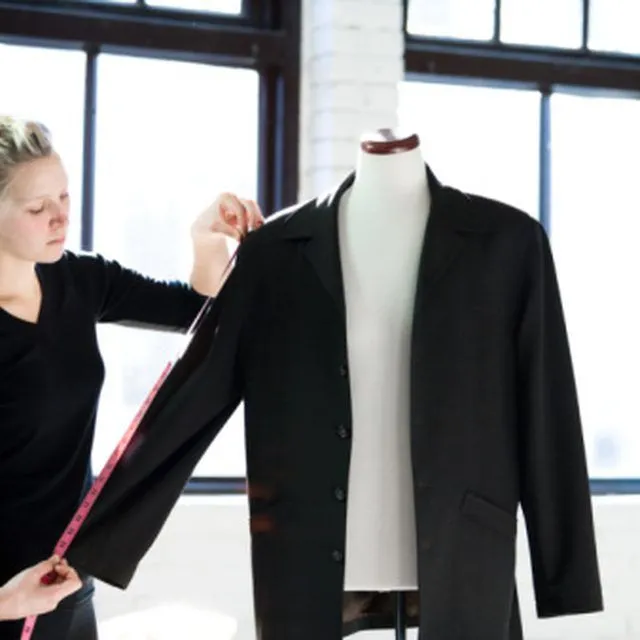
Photo: tailor pinning blazer on woman alterations fitting room, via i.pinimg.com
Here is a theory we'd like to put to rest: the idea that French women dress better because they shop better. Spend an afternoon in a Paris arrondissement and you will notice something less romantic and more instructive — the clothes simply fit. Cuffs end exactly at the wrist bone. Hems hover at the precise point where the leg looks longest. Waistlines are waistlines.
The difference, say the tailors we consulted across three American cities, is not the garment. It is the second fitting.
What the Tailors Told Us
"Most American shoppers treat a garment as finished at purchase," says a master tailor with two decades of work across New York and Washington bridal and suiting markets. "French dressing culture treats purchase as the beginning. The garment is raw material."
We asked working alterations professionals to name the fixes with the highest return on investment. Five came up, in nearly identical language, every time.
The Five Worth Paying For
1. The trouser break. Nothing dates or dishevels a look faster than the wrong length. A proper break — one soft fold at the top of the shoe — costs between $15 and $30 and transforms even an inexpensive pant.
2. Sleeve length. A jacket sleeve should end where the shirt cuff peeks a half inch. Off-the-rack sleeves run long on most American bodies. Shortening sleeves with functional buttonholes is costly ($60–$100); without them, it's $25–$40.
3. Shoulder fit. The only fix tailors describe as foundational. Shoulders cannot easily be taken in, which is why the rule is to buy for the shoulder and alter everything else. When a garment does need shoulder work, expect $40–$80 — and treat it as a rescue, not a routine.
4. Hem placement. Skirt and dress hems should be set to the wearer, not the manufacturer's guess. A professional hem runs $20–$50 depending on lining and detail. The right hem length can add what appears to be an inch of height and an entire size of polish.
5. Waist nipping. Taking in a blazer or dress at the waist — $20–$45 — is the single alteration most responsible for the tailored look. It converts a boxy garment into a silhouette.
The Math
Consider a realistic scenario. A $250 wool blazer and $120 trousers from a mid-range American retailer, plus alterations:
| Item | Cost |
|---|---|
| Blazer | $250 |
| Trouser hem + waist | $60 |
| Sleeve shortening | $35 |
| Trouser break | $20 |
| Total | $365 |
Compare this to a $900 designer blazer worn off the rack, unaltered, sleeves covering the hands and hem hitting at an arbitrary point. The tailored mid-range piece fits better, photographs better, and lasts longer, because garments that fit correctly are worn — and maintained — more often.
"A $300 suit that fits beats a $3,000 suit that doesn't," as one Chicago alterations veteran put it. "Nobody on the street asks what the label says. They ask who your tailor is."
Budgeting for the Second Fitting
A practical rule for the Haus of Lafayette reader: allocate 15 to 20 percent of any clothing purchase for alterations, and more for tailoring-intensive pieces like blazers and trousers. Build a relationship with a local tailor the way one builds a relationship with a stylist — bring the same shoes you'll wear, ask for opinions, and tip well at the holidays.
The French look, it turns out, is not for sale in any boutique. It is stitched, quietly and expensively, on the second floor above the dry cleaner.