First the Scent, Then the Suiting: How a Bottle of French Perfume Became the Gateway to a Whole Wardrobe

Photo: Polymagou, CC BY-SA 4.0, via Wikimedia Commons
There is a sequence to the modern transatlantic wardrobe, and it rarely begins with clothing. Ask around — at the boutique counter, in the group chat, on the fitting-room line in SoHo — and you will hear the same confession: the first purchase was not the coat. It was the perfume.
A bottle of French fragrance sits at a peculiar intersection of aspiration and access. At a time when a single designer jacket can command four figures, a ninety-dollar eau de parfum from a storied Parisian house offers something rare: genuine proximity to European luxury without the financial leap. The scent carries the codes — the iris, the ambrette, the insistence that beauty should be composed rather than assembled — at a fraction of the entry price.
The Affordable Threshold of a Very Old Dream
American shoppers have long admired French dress from a respectful distance. The appeal is structural: the Gallic approach to wardrobe-building prizes fewer, better things — a philosophy that sounds lovely until one prices the "better." A French coat, cut and finished on the other side of the Atlantic, is an investment that demands deliberation, savings, and often a season of consideration.
Fragrance asks for none of that patience. It delivers the house's identity in concentrate form. The woman who cannot yet justify the bouclé can absolutely justify the bottle, and in doing so she performs a kind of rehearsal — living with the brand, wearing its signature, deciding whether its sensibility fits her life in Minneapolis or Philadelphia, not just its imagery.
The Houses That Taught Us to Aspire
The iconic French maisons understood this dynamic decades before it became a marketing strategy. Chanel, Dior, Guerlain, and Hermès built fragrances that functioned as ambassadors — scents that introduced American women to a house's aesthetic long before they touched its garments. No. 5 was many women's first encounter with the idea of Chanel, arriving years before the tweed.
That tradition holds. A first bottle from one of the great houses is rarely the last purchase; it is the opening bid. The scent wears in, the loyalty deepens, and the coat that once felt impossible begins to feel inevitable.
The Indie Counterpoint: Parisian Codes, American Hands
What has changed is the competition. A wave of American independent perfumers — many based in Brooklyn, Portland, Los Angeles, and Marfa — are composing fragrances that borrow Parisian grammar while speaking with a distinctly American accent. Think galbanum and vetiver rendered with a dry, almost bracing clarity; orange blossom stripped of syrup and set against leather; the idea of a Left Bank apéritif rebuilt for a desert highway.
These perfumers offer the same gateway at often gentler prices, and with a narrative American shoppers increasingly want: small-batch craft, traceable ingredients, a maker with a name. For some, the indie bottle becomes the bridge — a way to practice French codes before committing to the French label.
Why Scent Builds Loyalty Faster Than Fabric
Fragrance occupies memory in a way clothing cannot. A coat is seen; a scent is felt by everyone in the elevator. Psychologists call it associative conditioning, but shoppers call it something simpler: that's my smell. Once a scent attaches to a woman's sense of self, the brand behind it attaches too.
Luxury houses know this. It is why fragrance counters anchor the ground floor of every flagship from Paris to Chicago's Magnificent Mile — the perfume is the handshake, and the ready-to-wear upstairs is the relationship. A customer who wears the house's scent daily has, in effect, already joined. The garment purchase becomes not an introduction but a confirmation.
A Practical Ordering for the Scent-First Shopper
For those building the transatlantic wardrobe from the bottle up, a rough sequence serves well:
- The signature scent. Choose one French house or one American indie riffing on Parisian codes, and wear it exclusively for a season. Commitment teaches discernment.
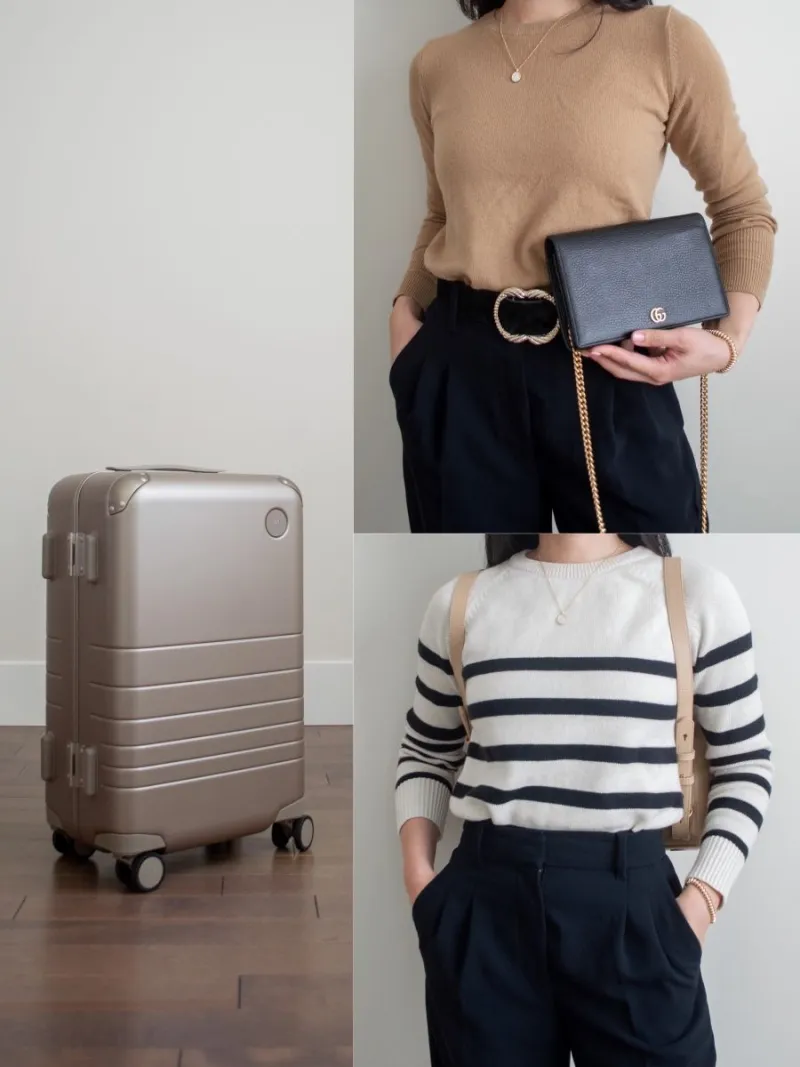
- The accessory. A scarf, a leather good, a small bag — the second-most-accessible entry point, and one that pairs naturally with a fragrance ritual.
- The knit or the blouse. The first garment, ideally something worn close to the skin where the scent lingers.
- The coat. The destination purchase. By the time it arrives, it will not feel like a splurge. It will feel like the wardrobe catching up to the perfume.
The Bottle Before the Coat
There is something fitting about the fact that American women are entering European luxury through the smallest, most intimate product a house makes. It suggests the aspiration was never really about logos or price points — it was about a feeling of composed, considered elegance that survives the commute.
The coat will come, for those who want it. But the perfume came first, and in a quiet way, it was always the point.