The Transatlantic Fitting: A Practical Field Guide to French Sizing for American Shoppers
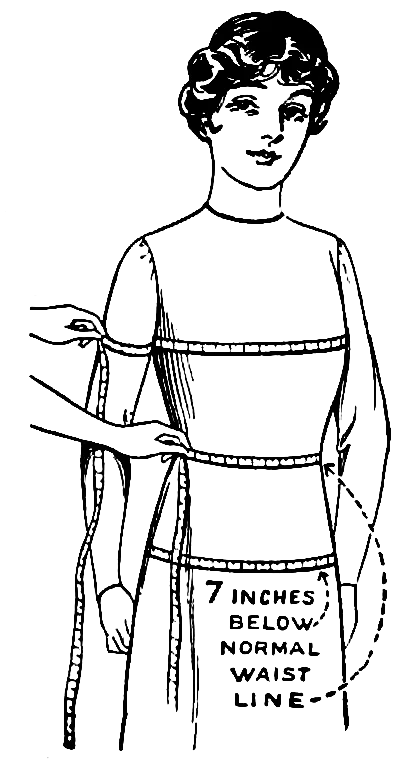
Photo: Butterick Publishing Company, Public domain, via Wikimedia Commons
Every American who has fallen in love with a French label online has eventually met the same heartbreak: the package arrives, the garment is beautiful, and it fits like it was cut for someone else entirely. Sometimes smaller. Sometimes, bafflingly, larger. French sizing is not a translation; it is a different language with different grammar. Here is how to become fluent before you click "add to cart."
The Basic Conversion — and Why It Lies
Start with the arithmetic everyone quotes: a French size equals an American size plus 30 or so. A FR 36 is roughly a US 4, a FR 38 a US 6, a FR 40 a US 8, and so on up the ladder. Men's suiting runs on a separate logic, but for womenswear this formula is a serviceable starting point.
It is also, frequently, wrong. European brands cut closer to the body — less ease, narrower shoulders, higher armholes, and a bust and hip mapping that assumes a different proportion. A US 6 body accustomed to American vanity sizing (more on that below) may find a FR 38 snug through the ribcage. Meanwhile, a vintage FR 40 from the 1970s may run so small it wouldn't button over a modern FR 34. Sizing is a rumor, not a rule.
Vanity Sizing: The Transatlantic Divide
American brands have spent forty years quietly inflating their numbers. The size 8 of 1975 is today's size 4 or even 2, depending on the label. French brands, on the whole, have resisted this drift far more stubbornly. The result: an American shopper who wears a 4 at home may genuinely need a FR 38 or even 40, and the number on the tag can feel like an insult. It is not. It is simply a different scale, uncorrupted by American marketing psychology.
Our advice: divorce your ego from the number. In the ateliers of Paris, nobody discusses the tag. They discuss the fit.
What Our Testers Found
We sent five volunteers of varying proportions on a month-long ordering spree across French and French-inspired e-commerce. Their findings were instructive:
- Small busts, narrow shoulders: Ran true to the conversion chart or even small. A 32B tester ordered her chart size and kept everything.
- Fuller busts and hips: Consistently sized up one full French size, particularly in structured tailoring and button-front dresses.
- Tall shoppers (5'9"+): Found sleeve and inseam lengths short across the board. Consider petite-and-tall-free French brands a reason to befriend a tailor.
- Vintage buyers: Every single vintage order ran at least one size — often two — smaller than the tag suggested. Measure the garment, not the label.
Five Rules Before You Order
- Measure yourself in centimeters. French patterns are drafted metrically. Your bust in centimeters is worth more than any conversion chart.
- Read the flat-lay measurements, not the size. Reputable European retailers list garment dimensions. Compare them to a piece you own that fits.
- Beware the "one size" trap. French one-size frequently means FR 36–38 only. If you wear a US 10, walk away.
- Order two sizes when shipping is free. Keep the better one, return the other, and never gamble on a final-sale piece in an unfamiliar brand.
- Budget for the tailor. A $30 alteration can rescue a nearly-right garment. A perfect fit is the entire point of European dressing.
The Cheat-Sheet
Print this and tape it inside your closet: FR 34 = US 2 · FR 36 = US 4 · FR 38 = US 6 · FR 40 = US 8 · FR 42 = US 10 · FR 44 = US 12. Then cross out the numbers and write "measure the garment" across the whole card, because that is the real lesson. European sizing rewards the shopper who does her homework — and punishes, gently but firmly, the one who does not.
The French fit is worth the effort: closer to the body, more architectural, more deliberate. Learn its language, and the transatlantic fitting becomes less a gamble and more a homecoming.