Provenance Is the New Luxury: Inside America's Obsession with French Vintage
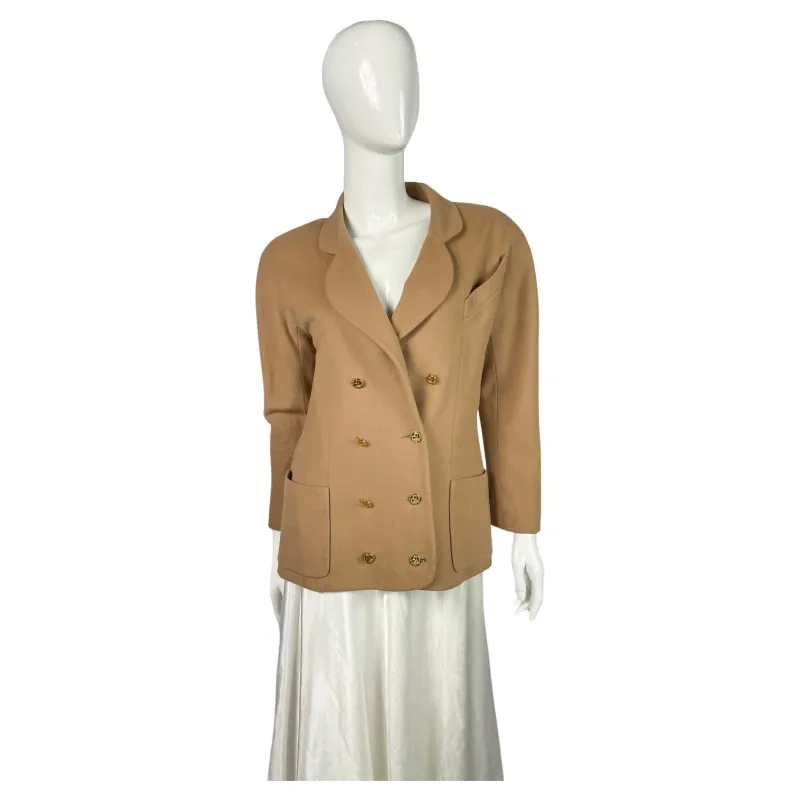
Photo: vintage Chanel YSL blazer clothing rack boutique resale shopping, via a.1stdibscdn.com
Somewhere in Brooklyn this weekend, a twenty-something will pay more for a 1987 Saint Laurent blazer than her mother once paid for a new one. She will know the season, the collection, and possibly the boutique that originally sold it. She is not an anomaly. She is the leading edge of a market shift that the fashion industry has been slow to name and slower to understand.
Let us name it now: provenance has become the new luxury. And the American appetite for European vintage is its most vivid expression.
The Numbers Behind the Hunt
The resale market has long since outgrown its thrift-store reputation, but the segment commanding attention is specific: authentic European houses with documented heritage. Yves Saint Laurent's 1970s tailoring, Chanel's tweed from any era worth having, Hermès scarves with their original hems — these pieces trade at prices that rival, and often exceed, contemporary retail.
What distinguishes today's American vintage shopper from the collector of a decade ago is intent. This is not bargain hunting. It is wardrobe building with a thesis: that a garment with history carries an authority no new production can counterfeit.
What the Dealers Know
Speak with vintage dealers in New York, Los Angeles, and Chicago, and a consistent picture emerges. The best American clients arrive educated. They know that a genuine Chanel garment carries a serial sticker (post-1986) and that pre-labeled pieces demand deeper verification. They know French sizing runs differently, that couture-era construction shows in the interior finishing, and that a flea-market find in Lyon can outperform anything on a department store floor.
Dealers describe a client base that reads auction archives the way previous generations read magazines. Authentication services — Entourae, Real Authentication, and the in-house experts at platforms like Vestiaire Collective and Fashionphile — have professionalized what was once a gentleman's club of insiders. The result: trust, and with trust, scale.
The smartest dealers have also become educators, teaching clients to spot the tells of a genuine piece: the weight of French wool, the hand of properly aged silk, the idiosyncrasies of vintage labeling and union tags. In a market flooded with counterfeit 'vibe' pieces, knowledge is the currency.
Why European Vintage, Specifically
A fair question: why does the American vintage shopper reach for Paris rather than, say, American heritage brands of equal quality?
The answer is partly material — French houses of the twentieth century produced garments with a construction philosophy closer to architecture than apparel. But the deeper answer is symbolic. European vintage offers the elegance of the Old World without its gatekeeping. A Chanel jacket from 1992 on a woman in Austin, Texas, is not an imitation of French style. It is an American argument about who gets to wear it.
This is where the vintage movement reveals itself as something more than shopping behavior. It is a declaration of independence — from seasonal churn, from algorithmic trend cycles, from the idea that a wardrobe must be perpetually new to be valid.
The Opinion: Vintage Is the Thesis, Not the Trend
We will state our position plainly. Vintage is not a trend within fashion; it is a critique of fashion. And it is, we believe, the truest marriage of European elegance and American individualism available to the modern shopper.
Consider what the combination produces. The European contribution: craftsmanship, restraint, design language refined over decades. The American contribution: the insistence on self-authorship, the refusal to wear a uniform, the democratic belief that a great garment belongs to whoever earns it — through knowledge, through patience, through the hunt.
Fast fashion offers the opposite trade: novelty without history, volume without meaning. The American shopper trading the checkout line for the archive is not being retrograde. She is being more modern than the industry that presumed to define modernity for her.
A Practical Coda for the Aspiring Collector
For those persuaded: begin with education, not acquisition. Study the labeling conventions of your target era. Learn the difference between boutique lines and runway pieces within the same house. Buy the blazer before the handbag — tailoring is harder to fake and appreciates more reliably. And when you find the piece, wear it. A Chanel jacket in a closet is a commodity; on a street in Chicago, it is a wardrobe with a memory.
Provenance, after all, is not completed at purchase. It is continued at wear.