One Silhouette, Worn on Repeat: The Case for Dressing Like Yourself Every Single Day
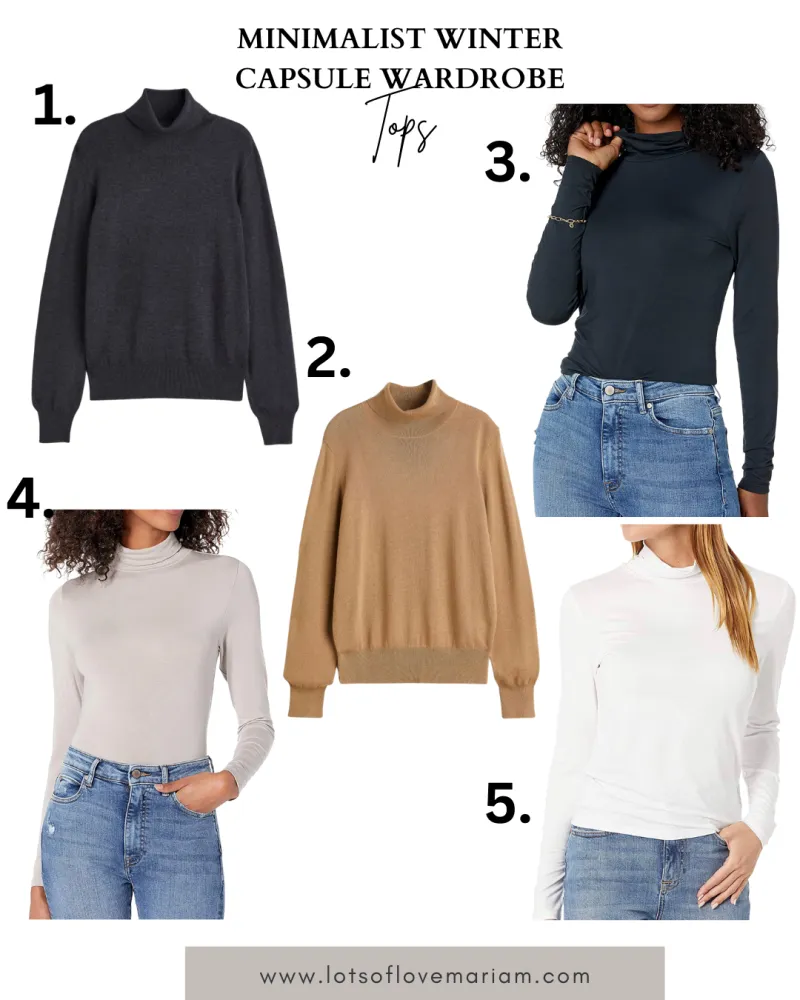
Photo: minimalist capsule wardrobe woman black turtleneck uniform style, via lotsoflovemariam.com
Somewhere along the way, we confused a wardrobe with a performance. The American woman has been asked, for decades, to reinvent herself each season — to absorb every trend cycle, to keep pace, to remain legible as someone current. It is exhausting work, and increasingly, she is resigning from the position.
The evidence is everywhere: capsule wardrobes dominating bestseller lists, personal stylists advertising 'closet edits' as their core service, and a quiet but unmistakable cultural shift toward what has come to be called the personal uniform — a repeated, recognizable way of dressing that a woman commits to and, crucially, stops apologizing for.
What a Uniform Actually Is
Let us be precise, because the term invites the wrong picture. A uniform is not a habit, and it is not sameness. It is a signature silhouette — a shape, a palette, a small set of fabrics — repeated with variation. One woman we know has worn a black turtleneck, wide trousers, and a gold chain nearly every working day for six years; the pieces change, the line does not. Another's uniform is a midi dress and flat boots, summer and winter, the dress fabric simply rotating with the weather.
The Parisian comparison is inevitable and partially earned. French dressers have long operated on this principle — a personal code refined over decades rather than a wardrobe rebuilt each autumn. But American women are not copying it so much as translating it. The American version tends to be more practical, more denim-tolerant, and considerably less precious.
The Psychology of Opting Out
The most compelling argument for the uniform is not aesthetic. It is cognitive. Every decision deferred to the morning — what to wear, whether it still fits, what it signals — is a decision taken from something else. Women who adopt a uniform describe the change in strikingly similar language: not 'I look better' but 'I think better.' The closet stops being a daily referendum on the self.
There is also a subtler effect at work. When you dress the same way repeatedly, people begin to recognize you by it. In a culture that rewards reinvention, this is quietly radical: the uniform says, in effect, I am not a new person each season, and I no longer need to pretend otherwise. Consistency becomes a form of identity rather than a failure of imagination.
The Sustainability Ledger
The uniform also happens to be the most environmentally honest way to dress. A wardrobe of thirty well-worn pieces replaced annually consumes a fraction of the resources of a trend-driven closet of two hundred. Buying becomes infrequent and deliberate; repairs become rational rather than romantic. Fast fashion depends on dissatisfaction as a business model, and the uniform is, structurally, a refusal of dissatisfaction.
Critics will note — fairly — that uniforms require an upfront investment in quality. This is true, and it is why the movement's accessibility remains a genuine problem. But secondhand markets have softened that barrier considerably; a signature look built from vintage and consignment is not merely possible but increasingly the norm among the women we've spoken with.
The Objection, and Our Answer
The standard objection is boredom. Won't you tire of yourself?
In practice, the opposite occurs. Because the uniform removes the daily negotiation, attention shifts to the details that remain variable — a scarf, a shoe, a shade of lipstick. Women with uniforms report noticing clothes more, not less: they have become connoisseurs of their own narrow category rather than distracted tourists in all of them.
The trend cycle will continue without any of us. It always has. The question is whether American women will keep volunteering for it — and judging by the closets we're seeing, the answer is arriving one repeated outfit at a time.